


Every year, a few million people choose Sorrento for their Italian holiday. Most of them enjoy it. Some of them love it. A smaller number come back looking slightly puzzled — they saw the postcard version and are not entirely sure what all the fuss is about. This guide is for the people who want to land in the second or third category, not the last one.
We write this from Via San Cesareo 49, where Limonoro has been producing and selling limoncello since 1905. We have watched Sorrento change across generations. We know which parts of the town reward your time and which parts are best walked through quickly.
What Kind of Place Is Sorrento?
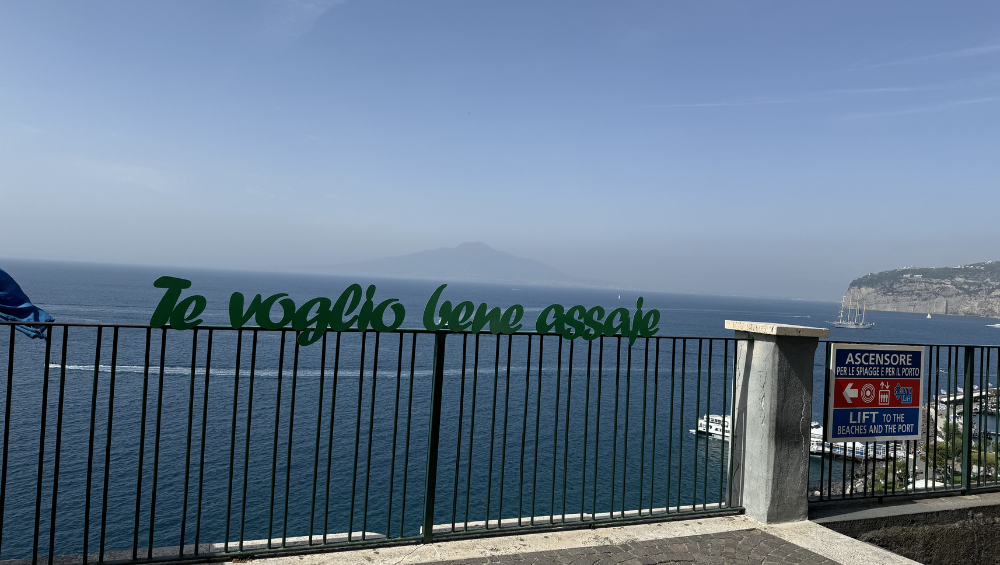
Sorrento sits on the edge of a cliff above the Bay of Naples, looking south across the water towards Capri. It is not a beach resort in the conventional sense — the town itself sits high above the sea, connected to the water by steep stairways and old boat lifts. It is not a village either: it has around 17,000 residents, a real working centre, markets, schools, and a life that continues long after the tourist season ends.
What it is, precisely, is a town with deep roots and a very particular character. The historic centre — a grid of narrow covered streets dating back to the Greek and Roman periods — is one of the most intact old town centres on the southern Italian coast. The lemons grown in the terraced groves above and around the town are protected by IGP designation, among the finest citrus in the world. The light in the late afternoon, when it catches the tufa stone and the bougainvillea and the sea below, is genuinely hard to describe.
It is also a popular destination. In July and August, Corso Italia can feel crowded. The ferry queues can be long. The restaurants near the main piazza adjust their prices accordingly. This is not a secret. It is manageable, and it does not define the whole experience — but it is worth knowing before you arrive.
Is Sorrento Expensive?
Honestly: more expensive than inland Italy, less expensive than the Amalfi Coast towns further east. A decent dinner for two with wine will typically cost between €60 and €100 at a mid-range restaurant. Coffee is the same price as anywhere in Italy — do not let anyone charge you €4 for an espresso without complaining. Accommodation ranges widely, from basic B&Bs at €80–120 per night to large cliff-top hotels at €400 and above.
The things that make Sorrento worth visiting are almost entirely free: the streets, the views, the swimming spots, the atmosphere in the evening. Where you spend money is largely your choice.
Is Sorrento Good for Families?
Yes, genuinely. The old town is compact enough to walk everywhere without exhausting small children. The Baths of Queen Giovanna — a natural sea pool about three kilometres from the centre — is one of the best swimming spots on the coast and has no entrance fee. The boat trips to Capri and along the Amalfi Coast are exciting for children. The food is accessible. The streets are safe.
What Sorrento does not have is a sandy beach in the town itself. The coastline here is mostly cliff and rock, with small beach clubs clinging to the water below. If a long sandy beach is the central requirement of your holiday, Sorrento is not the right base.
Sorrento or Amalfi Coast — Which Is Better?
This is the question we are asked most often, and it deserves a straight answer. Amalfi, Positano, and Ravello are extraordinarily beautiful. They are also extremely small, very expensive, and in high season extremely crowded on the single road that connects them. Staying in Sorrento and making day trips to the Amalfi Coast gives you the best of both — the beauty of the coast without the logistical difficulty of basing yourself there.
Sorrento has something the Amalfi towns do not: a real, functioning town centre with local life in it. Shops that are not aimed exclusively at tourists. Restaurants where people go on Tuesday evenings, not just Saturday nights. A character that exists independently of the visitors passing through it.
What to Skip
The boat tours that promise to take you around Capri in two hours. The limoncello shops near the ferry terminal that sell product made elsewhere. The restaurants with photographs of the food on laminated menus. The organised excursions to Pompei that take five hours and show you the most crowded sections.
Pompeii is genuinely unmissable — but go early, go independently, go on a weekday. The Circumvesuviana train from Sorrento takes you there in about thirty minutes.
What Not to Miss
- The old town at 8am, before the day trips arrive, when the streets belong to the town’s residents.
- The Baths of Queen Giovanna — the natural pool carved into the rock west of the centre.
- Marina della Lobra, the fishing harbour at Massa Lubrense, which most visitors never reach.
- A proper limoncello tasting at a producer who actually makes the product — not just sells it.
- Gnocchi alla Sorrentina, eaten simply, in a small restaurant without a view.
Walk into Limonoro on Via San Cesareo 49 any day of the week. Taste everything on the counter — limoncello, crema di melone, chocolate, biscuits — before you decide what to bring home. No booking required.